
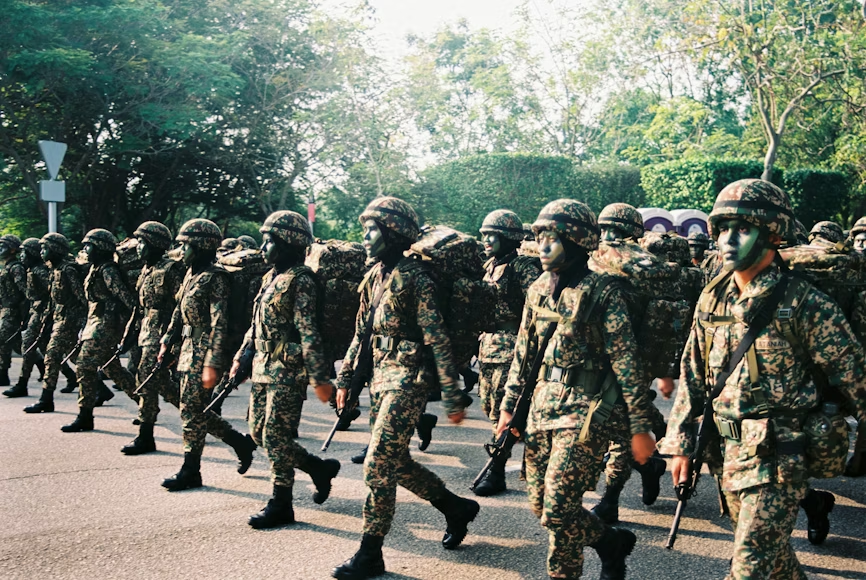
Understanding why coups still happen and what typically follows them helps explain why these events feel abrupt but are rarely unexpected.
A coup is not simply a sudden grab for power; it is usually the final expression of long-standing tensions within a state’s political and security structures.
Coups are often described as relics of the past, yet they continue to occur worldwide. When civilian authority weakens, and military influence grows, the risk of a takeover increases sharply.
The Conditions That Make Coups More Likely
Coups tend to emerge where institutions are fragile. Weak courts, politicized security forces, and contested elections create environments where power feels negotiable rather than fixed. When leaders rely heavily on the military to maintain order, they unintentionally elevate it as a political actor.
Economic stress also plays a role. Inflation, unemployment, or shortages can erode public confidence and justify military leaders to intervene “in the national interest.” These conditions do not cause coups on their own, but they lower resistance to them.
A key warning sign is when the military sees itself as the guardian of the state rather than subordinate to civilian rule.
Explore When Leaders Resign: How Power Transfers Differ Around the World for transition contrasts.
Why the Military Often Takes the Lead
Military factions typically lead coups because they control an organized force. Unlike protests or political opposition, the military can seize infrastructure, detain leaders, and impose curfews quickly.
Internal rivalries matter. Coups often reflect divisions within the armed forces rather than unified action. One faction moves first to prevent the other from gaining an advantage, accelerating events.
Military leaders also tend to believe they can restore stability more efficiently than civilian politicians, even when past interventions suggest otherwise.
How Coups Are Justified Publicly
Public messaging after a coup follows predictable patterns. Leaders claim to be acting temporarily to restore order or to protect democracy from corruption. Constitutions may be “suspended,” parliaments dissolved, and emergency rule declared.
Language is carefully chosen. The word “coup” is avoided in favor of terms like “corrective action” or “transition.” These narratives aim to normalize the takeover and reduce domestic and international backlash.
Promises of future elections are typical, though timelines are often vague or repeatedly delayed.
Read How Countries Declare States of Emergency and What Changes Overnight for insights on emergency powers.
What Happens Immediately After a Coup
The first phase after a coup focuses on control. Media outlets may be restricted, borders monitored, and public gatherings limited. Key political figures are detained or sidelined to prevent counteraction.
International reactions follow quickly. Regional bodies may suspend membership, while foreign governments issue statements balancing condemnation with caution. Aid and cooperation are often paused pending clarification.
This initial period is unstable. Counter-coups, protests, or internal splits can still derail the new leadership.
The Longer-Term Political Trajectory
In the months that follow, outcomes diverge. Some coups lead to prolonged military rule, with officers entrenching themselves in governance and economic systems. Others transition back to civilian leadership, though often with altered power balances.
Even when elections are held, the military may retain informal influence behind the scenes. Civilian governments that follow coups frequently operate under constraints imposed by the armed forces.
Coups rarely resolve underlying problems. They reshuffle authority without addressing institutional weakness.
Check out What It Means When a Country ‘Recognizes’ Another State for legitimacy signals.
Why Coups Often Repeat
Countries that experience one coup are statistically more likely to experience another. Each intervention weakens norms against military involvement in politics and normalizes the use of force as a path to power.
Civilian leaders may respond by purging rivals or relying even more on security forces, reinforcing the cycle. Trust between institutions erodes, making stability harder to sustain.
This repetition explains why some states experience waves of coups rather than isolated events.
Learn Why Borders Flare Up: The Most Common Triggers of Territorial Disputes for instability patterns.
What Coups Reveal About State Power
Coups expose who truly holds power when systems are under stress. They show whether loyalty lies with laws, leaders, or armed institutions.
For observers, coups are not just dramatic headlines. They are indicators of deeper structural failure and contested authority.
Understanding why coups happen and what usually follows makes it easier to interpret both their causes and their consequences.