Understanding where carbon capture works, where it struggles, and why it remains controversial helps clarify its realistic role in global climate strategy.
Carbon capture is often presented as a technical fix for one of the world’s hardest climate problems: how to reduce emissions from industries that cannot easily be electrified or switched to clean energy.
In theory, capturing carbon dioxide before it enters the atmosphere allows societies to keep using existing infrastructure while lowering climate damage.
In practice, carbon capture has delivered mixed results, uneven adoption, and intense debate about whether it is a solution or a distraction.
What Carbon Capture Is Designed to Do
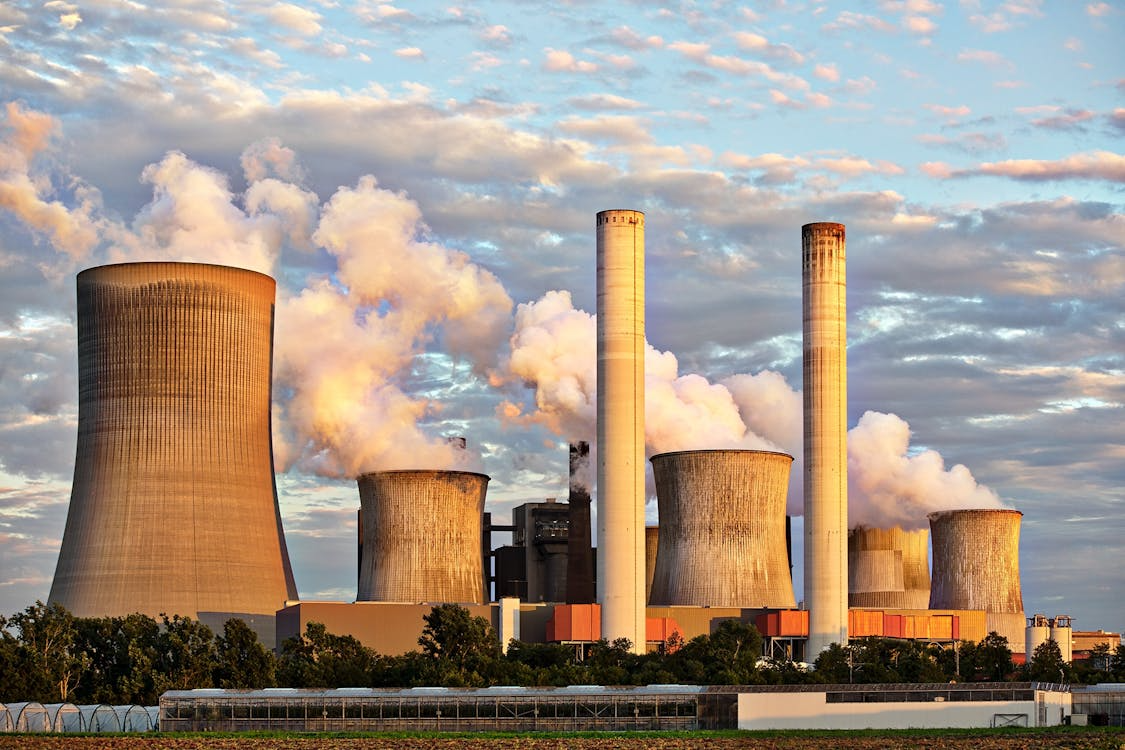
Carbon capture refers to a set of technologies that trap carbon dioxide emissions at their source or remove them from the air, then store or reuse the captured gas. Most current systems focus on point sources, such as power plants, cement factories, steel mills, and refineries, where emissions are concentrated and easier to collect.
The basic process involves separating carbon dioxide from exhaust gases, compressing it, and transporting it to a storage site. Storage usually involves injecting carbon into underground geological formations, such as depleted oil and gas fields or deep saline aquifers. In some cases, captured carbon is reused for industrial purposes, such as enhanced oil recovery or the production of materials.
The promise of carbon capture lies in its ability to address emissions that renewable energy alone cannot eliminate quickly. Heavy industry accounts for a significant share of global emissions, and many industrial processes chemically produce carbon dioxide as part of normal operations. Carbon capture is designed to intercept those emissions without requiring an immediate overhaul of industrial systems.
Explore Green Energy Transition: The Minerals Nobody Talks About for clean energy resource constraints.
Where Carbon Capture Actually Works Today
Carbon capture has shown its strongest performance in specific industrial settings rather than across the entire energy system. Facilities with high, steady carbon dioxide concentrations are the most viable candidates. This includes natural gas processing plants, fertilizer production, and certain chemical manufacturing operations.
In these environments, capture technology can achieve relatively high efficiency because the carbon dioxide stream is already separated or can be more easily isolated. Several long-running projects have successfully captured and stored millions of tons of carbon dioxide over decades, demonstrating technical feasibility under the right conditions.
Carbon capture is also used in enhanced oil recovery, where injected carbon dioxide helps extract additional oil from mature fields. While controversial, this application has driven early adoption by providing revenue that offsets capture costs. Without financial incentives or secondary uses, most capture projects would struggle to operate profitably.
These successes show that carbon capture can be an effective targeted tool, especially where emissions are unavoidable, and alternatives are limited. However, these examples represent a narrow slice of global emissions, not a universal solution.
Read How Global Supply Chains Break and How They Recover for infrastructure dependency.
Why Carbon Capture Struggles at Scale
Scaling carbon capture beyond niche applications introduces significant challenges. One of the biggest obstacles is cost. Capturing, transporting, and storing carbon dioxide requires energy, infrastructure, and long-term monitoring. In many cases, the process reduces the overall efficiency of power plants or factories, increasing operating expenses.
Infrastructure is another major barrier. Large-scale carbon capture would require extensive pipeline networks to move captured carbon to suitable storage sites. Building these networks involves regulatory approval, public acceptance, and high upfront investment. Many regions lack accessible geological storage close to emission sources, making transport impractical.
There are also technical limits. Capture systems do not remove all emissions, and performance varies depending on fuel type, plant design, and operating conditions. Maintenance, reliability, and long-term storage integrity remain ongoing concerns, especially as projects expand in number and size.
As a result, carbon capture deployment remains far below the scale needed to significantly reduce global emissions. While pilot projects and demonstration plants continue to grow, widespread adoption has yet to materialize.
Check out The Next Big Global Tech Disruption Might Be Batteries, Not AI for energy storage.
The Main Criticisms and the Role Going Forward
Carbon capture faces criticism not only for its limitations but for how it shapes climate policy choices. Critics argue that it can be used to justify continued fossil fuel use, delaying investment in renewable energy, efficiency, and demand reduction. If carbon capture is framed as a future fix, governments and companies may delay more difficult transitions.
There are also concerns about the risks of long-term storage. Although geological storage is considered stable when properly managed, carbon dioxide must remain contained for centuries. Monitoring and liability over such long timescales raise unresolved questions about responsibility and risk.
Supporters counter that carbon capture is not meant to replace clean energy but to complement it. They argue that without carbon capture technologies, certain sectors may have no viable near-term path to deep decarbonization. From this perspective, carbon capture is a bridge rather than a destination.
The emerging consensus among many experts is that carbon capture has a limited but important role. It is most useful where emissions are hardest to eliminate and least effective as a blanket solution. Its success depends less on technological hype and more on realistic deployment aligned with broader climate strategies.
Carbon capture is neither a silver bullet nor a failure. It is a tool whose value depends on how selectively and honestly it is applied.