
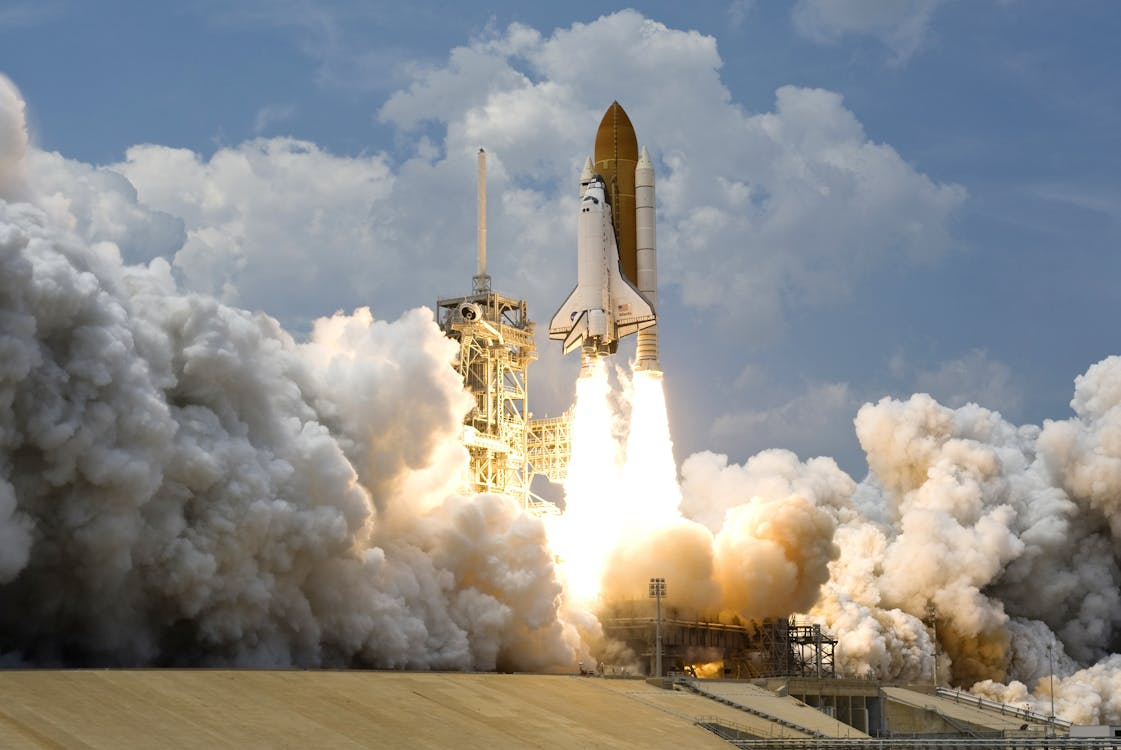
Understanding space launch industry changes helps explain why activity beyond Earth’s atmosphere increasingly affects economies, security, infrastructure, and the environment.
Space launches were once rare, government-led events tied to national prestige and scientific milestones. Today, they are becoming increasingly frequent, commercialized, and tightly integrated into everyday life on Earth.
Rockets now lift off weekly, sometimes daily, carrying satellites that support communication, navigation, weather forecasting, and global monitoring. This shift is transforming not just space exploration, but how modern societies function below.
From Occasional Missions to Routine Launches
For most of the space age, launches were infrequent and expensive. Governments carefully planned each mission, often years in advance, with limited tolerance for failure. Rockets were largely disposable, and costs restricted access to a small group of nations.
That model has changed. Reusable rockets, standardized components, and private-sector competition have dramatically lowered launch costs. Launch cadence has increased as rockets are refurbished and flown multiple times rather than discarded. What once required bespoke engineering is now moving toward industrial repetition.
This shift matters because launch frequency determines how quickly satellite networks can expand, be repaired, or replaced. Rapid launches enable companies and governments to respond more quickly to demand, failures, or geopolitical needs, turning space access into an operational capability rather than a symbolic one.
See The Global Race for Chips: Why Semiconductors Are Geopolitical for strategic technology competition.
Satellites Are Becoming Everyday Infrastructure
Most modern launches are not about astronauts or deep-space probes. They are about satellites that quietly underpin daily life. Communications satellites support phone calls, internet access, and emergency connectivity. Navigation satellites enable GPS services that power logistics, transportation, and agriculture. Earth-observation satellites track weather, climate patterns, and natural disasters.
As launch costs fall, satellite constellations grow larger and more specialized. Instead of a few large satellites, operators deploy thousands of smaller ones that work together. This approach improves coverage and redundancy but increases congestion in low Earth orbit.
The result is that space infrastructure is no longer distant or abstract. When satellites fail or are delayed, effects ripple through markets, supply chains, and public safety systems. Space launches have become a hidden but critical link in Earth’s technological backbone.
Explore What Quantum Computing Could Realistically Change First for future computing shifts.
Space Activity Is Reshaping Global Competition
The changing launch landscape is also altering geopolitics. Access to space now influences national security, economic competitiveness, and technological leadership. Countries view launch capability as a strategic asset, not just a scientific one.
Commercial space launch providers blur traditional boundaries between civilian and military space use. Satellites launched for commercial purposes can also support surveillance, mapping, or communications resilience during conflicts. This dual-use nature complicates regulation and increases the strategic importance of launch schedules and orbital positioning.
At the same time, more countries are entering the launch market, developing domestic rockets or partnering with private firms. This diversification reduces reliance on a small number of launch providers but increases competition for orbital space and spectrum access.
Space launches are no longer isolated technical events. They are part of a broader contest over data, influence, and technological independence.
Read AI Regulation Worldwide: Who’s Restricting What (and Why) for insights on global policy direction.
The Growing Problem of Debris and Congestion
One of the most visible consequences of increased launches is orbital congestion. Each launch adds objects to Earth’s orbit, including active satellites and spent rocket stages. Even small debris fragments can damage or destroy spacecraft at high velocity.
As satellite constellations multiply, managing space traffic becomes more complex. Collisions could trigger cascading debris events, making certain orbits unusable for years. This risk turns space sustainability into an Earth-based concern, affecting weather forecasting, navigation systems, and the reliability of communications.
Launch practices now face scrutiny not just for safety during liftoff, but for long-term orbital impact. Decisions made during launch planning influence congestion, collision risk, and the viability of future missions.
Check How Global Supply Chains Break and How They Recover for cascading system recovery patterns.
Why Earth Feels the Impact More Than Ever
Space launches matter for Earth because they shape systems people rely on without seeing. Faster launches mean quicker disaster response, improved connectivity in remote regions, and better environmental monitoring. At the same time, increased activity raises concerns about regulation, environmental impact, and shared responsibility for orbital space.
The launch boom reflects a broader pattern: space is becoming an extension of Earth’s infrastructure rather than a separate frontier. Choices about launch frequency, satellite design, and orbital management now have consequences that reach into daily life.
As launches become routine, their significance grows. What happens beyond the atmosphere increasingly determines what works, what fails, and what adapts on the ground.